


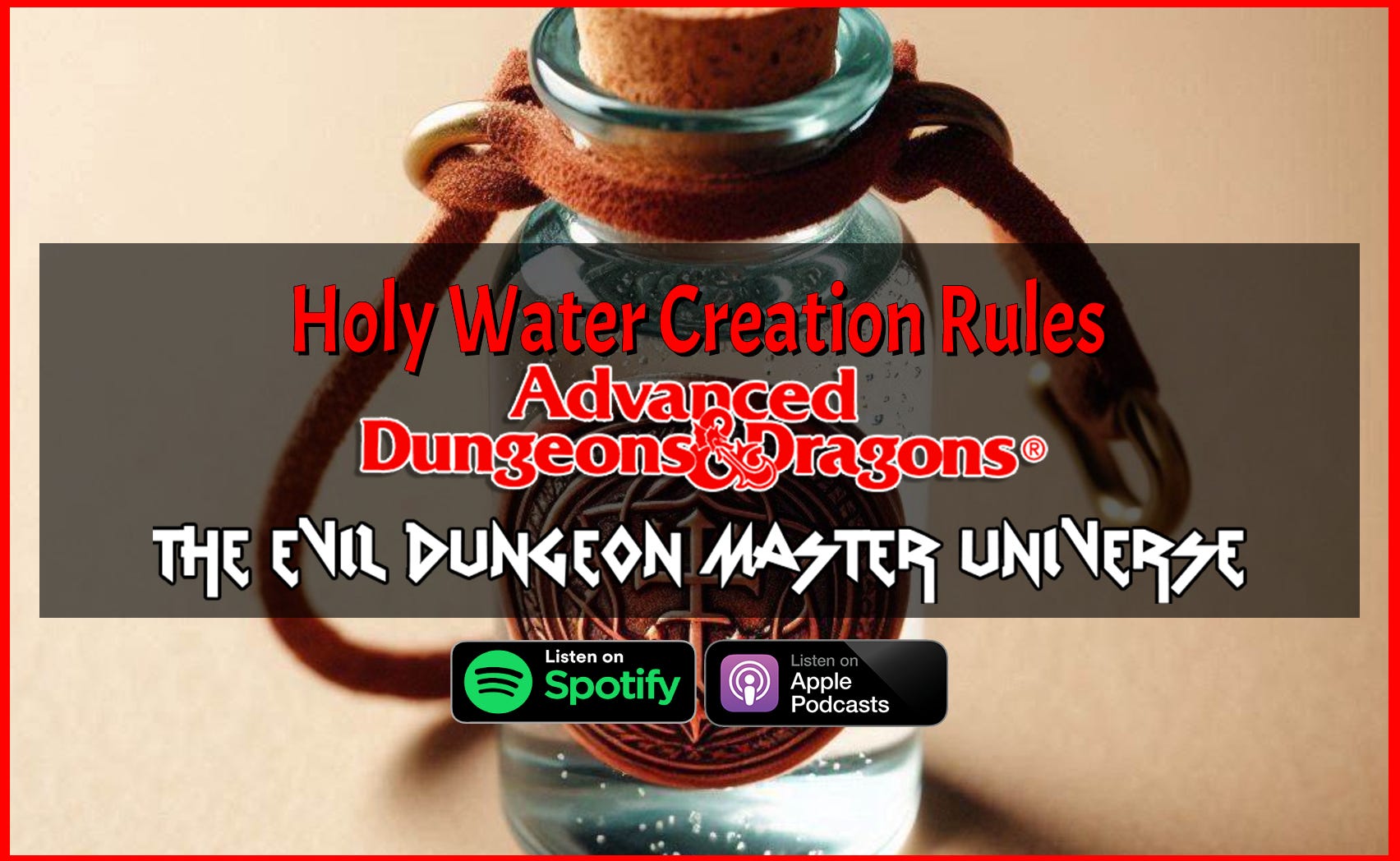
Today's podcast is talking about the holy water creation rules found in the DMG on page 115!
Only clerics, except druids, can create holy or unholy water using a special basin and font made of precious metals. The process requires casting specific spells and can only be done once a week. The amount of water produced depends on the metal used. If defiled, the font must be remade at a significant cost. Consuming holy water can delay lycanthropy or becoming undead.
Highlights -💧
Cleric Exclusivity: Only clerics (not druids) can create holy/unholy water.
Special Basin Required: A blessed/cursed basin made of precious metal is essential.
Spell Sequence: Specific spells must be cast in order for creation.
Weekly Limit: Creation can only happen once per week.
Defilement Consequences: Fonts can be desecrated, requiring costly remaking.
Consumption Benefits: Drinking holy water can slow lycanthropy or undeath.
Metal Capacity: The capacity of the basin varies by metal type.
Key Insights -🔍
Clerical Authority: Clerics hold a unique spiritual authority, emphasizing their role as mediators between the divine and mortals. This exclusivity underscores the gravity of their responsibilities. ⚔️
Material Significance: The choice of metal for the basin and font reflects the belief that offerings of higher value are more pleasing to deities, reinforcing the idea of sacrifice in worship. 💰
Ritual Complexity: The intricate process of creating holy/unholy water highlights the importance of ritual in religious practices, serving as a means of connecting with divine forces. ⛪
Limitations on Power: The weekly limit on water creation illustrates the balance of power in the universe, indicating that even divine blessings come with restrictions. ⏳
Risk of Defilement: The potential for fonts to be desecrated adds a layer of danger and vigilance to clerical duties, emphasizing the need for respect in sacred practices. ⚠️
Healing Properties: The medicinal benefits of holy water suggest its role as a protective agent against evil, reinforcing the cleric’s role as a healer and protector within the community. 💊
Economic Implications: The costs associated with creating holy/unholy water and the penalties for defilement suggest that religious practices have significant economic aspects, impacting the resources of clerical institutions. 📈
