


One of the smartest things in the old books is not a combat rule.
It is advice.
The Player’s Handbook says,
“Considerable enjoyment and excitement in early play stems from not knowing exactly what is going on.”
That is dead right.
Then it pushes even harder and tells players to leave discovery to actual adventuring, because
“….the joy of actually earning them will be well worth the wait.”
That is wisdom.
Not just old game advice. Real advice for how this stuff works at the table.
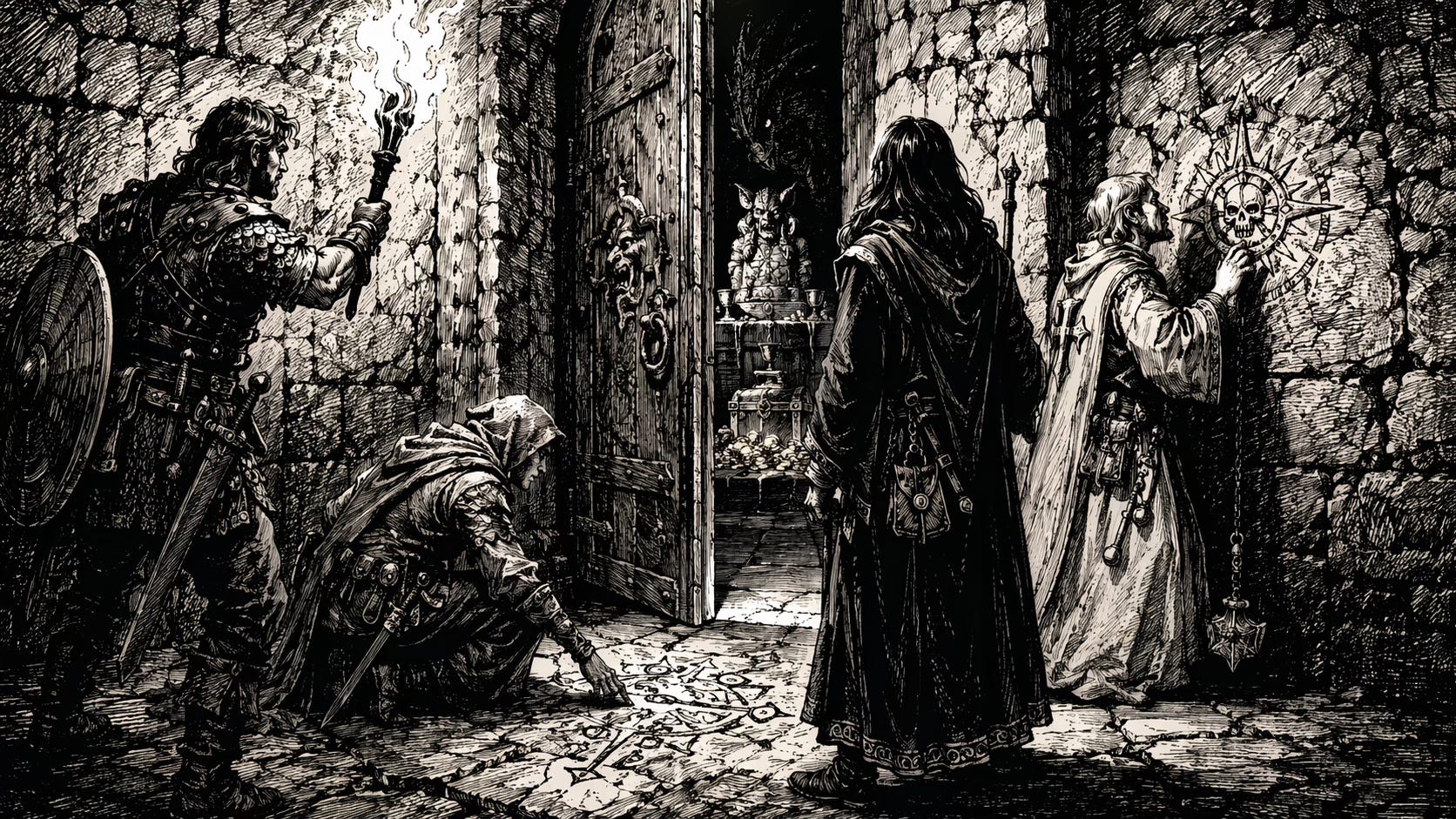
A lot of games get flatter once everybody knows too much. Every monster is known. Every trick is known. Every magic item gets measured before it gets touched. People stop poking at the world and start managing it. That kills something. It kills that little pause when the party hears a sound behind the door and nobody is sure what comes next.
That pause matters.
I think AD&D understands that better than people give it credit for. The books were not trying to hide information just to be jerks. They were protecting discovery. That is different. If the players do not know every answer yet, then the dungeon still has teeth. The world still has weight. A rumor can still feel important. A weird object can still feel weird.
And honestly, this goes past books.
A DM does not need to explain every corner of the setting. You do not need to tell the players what every cult believes, how every ruin was built, what every symbol means, or what sits on level four before they get there. Let some of it sit in the dark. Let them earn it. Let them be wrong for a while. That is good for the game. Maybe better than good.
Because once players know that not everything is handed to them, they start acting different. They ask better questions. They test things. They listen. They take notes. They stop assuming the world exists to explain itself on command.
That is where the game starts to feel alive.
There is another part in the Player’s Handbook that hits too. It says the game is demanding for players and Dungeon Masters alike, and the rewards are vast. That feels true. The reward is not just treasure or levels. The reward is that moment when the group figures something out because they were careful, or lucky, or bold, and not because the book or the DM just gave it away.
I like that a lot.
It reminds me that mystery is not the enemy of play. Mystery is part of play.
Too much explanation makes the game smaller. Too much certainty makes it feel solved. And AD&D, at its best, does not want to feel solved. It wants to feel like you are walking into something bigger than you, with half a torch, bad information, and just enough nerve to keep going.
That’s good wisdom.
Maybe one of the best bits in the whole stack of books.
I miss D&D feeling dangerous and unknown. It feels like there’s way too much meta knowledge now, and like I’m constantly chasing the high of that first goblin encounter in the dark.
Great article. I think it can be a little tricky to leave things a mystery in solo play, but it can be done.